

 See My Latest Article on HelloNation
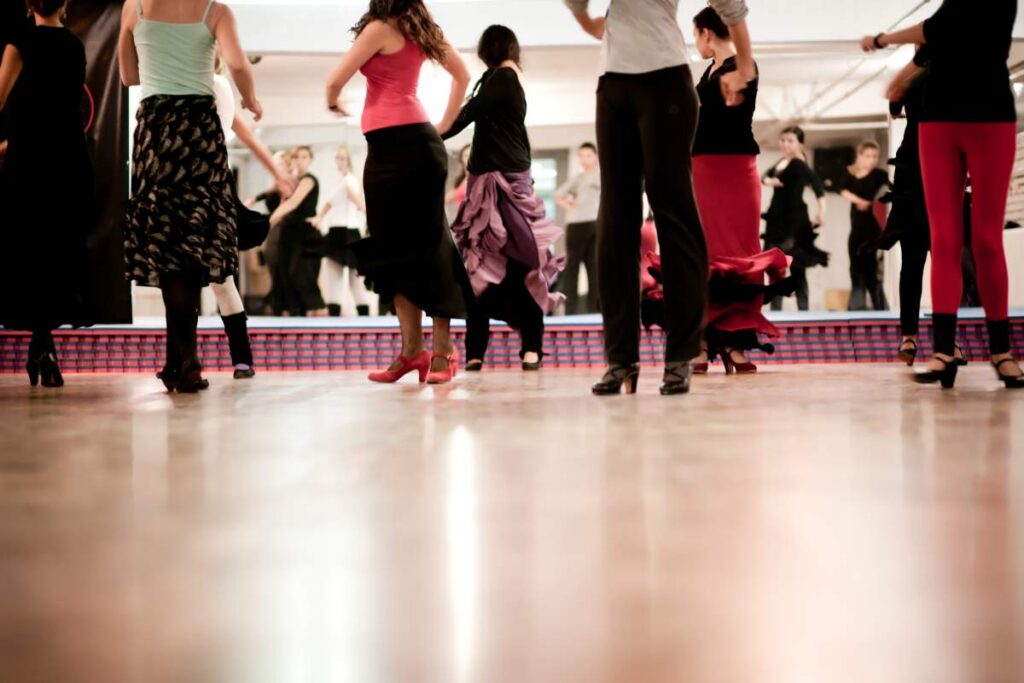
For beginners, neither private nor group dance lessons are automatically better. The right choice depends on learning goals, comfort level, schedule, budget, and the type of dancing involved. Ballroom, Latin dance, and wedding choreography each create different reasons to choose one format over the other.
Which option is usually easier for a complete beginner?
Group lessons often feel easier at the beginning because students learn alongside others who are also starting out. The shared experience can reduce self-consciousness and make basic steps feel less intimidating.
Private lessons can be easier for beginners who prefer individual attention. An instructor can adjust the pace, repeat a movement immediately, and explain a confusing detail without stopping a whole class.
A useful distinction is this:
- Group lessons provide structure, repetition, and a social learning environment.
- Private lessons provide customization, immediate feedback, and more control over the pace.
Neither format guarantees faster progress. A beginner who attends consistently and practices between lessons will usually improve more than someone who chooses a format but participates irregularly.
What are the main advantages of group dance lessons?
Group lessons work well for people who want a predictable class environment and the chance to practice with different partners. In ballroom and Latin dance, changing partners can help students learn how to lead, follow, adjust timing, and respond to differences in height, movement style, or experience.
Group instruction can also make dancing feel more natural socially. Beginners often discover that other students are working through the same challenges, such as remembering a sequence, staying on the beat, or coordinating footwork with upper-body movement.
The group setting is especially useful for:
- Adults who enjoy learning as part of a community
- Students who want to explore several ballroom or Latin styles
- Beginners who are unsure which dance they prefer
- People who want regular practice without an intensive personal plan
- Couples who want to become more comfortable dancing in front of others
A possible limitation is that the class must move at a shared pace. If a student is struggling with one step, the instructor may not be able to spend the entire lesson on that single issue. More advanced students may also find that a beginner class becomes repetitive after the basics are familiar.
What do private lessons offer that group classes may not?
Private instruction is designed around the student or couple rather than the average pace of a class. The instructor can focus on posture, balance, musical timing, foot placement, frame, turns, or partner connection according to the learner’s needs.
This can be particularly helpful in ballroom and Latin dance because small technical adjustments often affect the entire movement. A slight change in weight placement may make a turn feel more stable. A clearer lead or follow may make a pattern easier for both partners.
Private lessons are often a practical choice for:
- Students who feel anxious about learning in front of a group
- People with limited or irregular schedules
- Couples preparing a specific wedding dance
- Beginners with mobility concerns or previous injuries
- Learners who want to focus on one dance or a defined set of skills
- Students who need frequent correction or repeated explanations
The main tradeoff is that private instruction can feel more demanding because attention is focused on the individual. It may also provide less spontaneous social practice unless partner changes or other practice opportunities are added.
Is private instruction better for wedding choreography?
For a wedding dance, private lessons are usually more efficient because the choreography can be adapted to the couple, song, clothing, venue, and desired level of difficulty. A routine may need to account for a long dress, formal shoes, limited floor space, a raised platform, or guests standing close to the dance area.
Private instruction also allows a couple to decide how much choreography they actually want. Some couples prefer a simple first dance with natural movement and a few planned transitions. Others want a more structured routine with turns, musical accents, and a memorable ending.
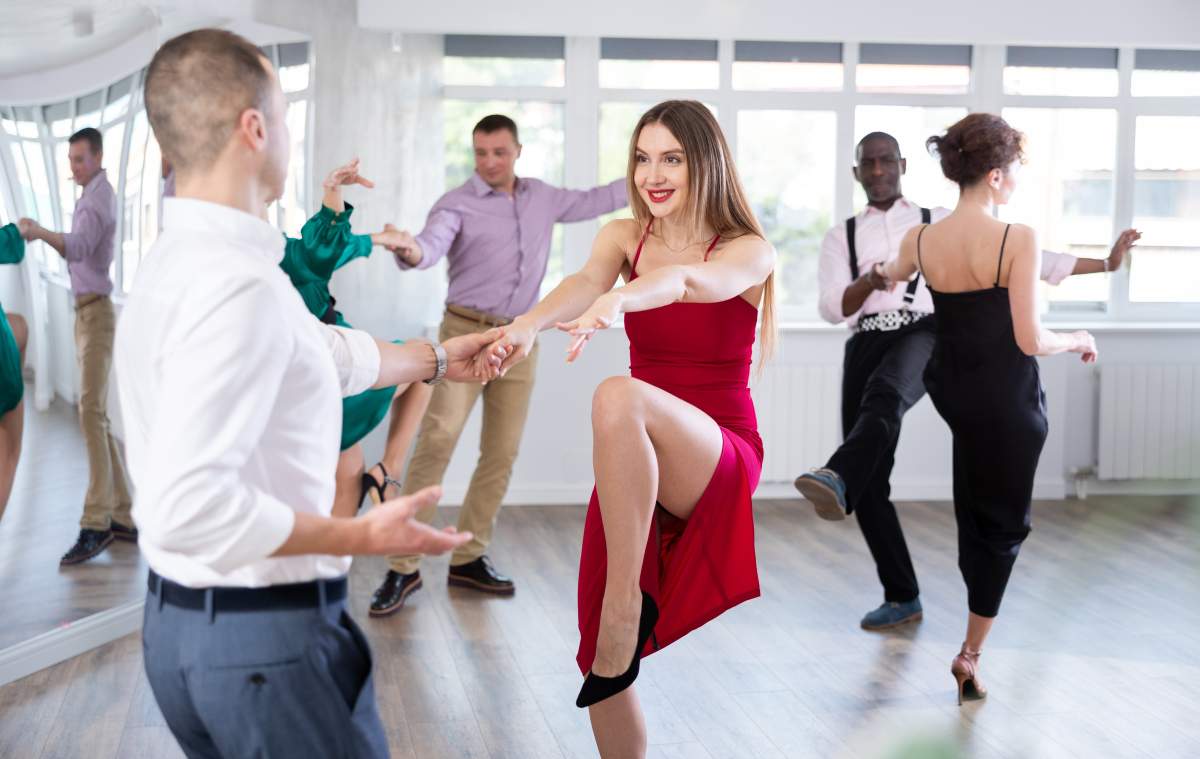
A wedding routine should be comfortable enough to perform under pressure. A complicated sequence that looks impressive during practice may not be suitable if the couple has little rehearsal time or feels nervous in front of guests.
Group lessons can still be useful before or alongside private wedding instruction. They may help a couple build general rhythm, improve comfort with partner movement, and practice dancing without relying entirely on a memorized routine.
Which format is better for ballroom or Latin dance?
The answer depends on whether the goal is general familiarity or technical development.
Group lessons are a strong starting point for exploring dances such as waltz, foxtrot, rumba, cha-cha, salsa, or swing. Students can experience different rhythms and movement qualities before choosing a favorite style.
Private lessons may be more useful when a student wants to develop a specific skill. Examples include improving a ballroom frame, making a rumba walk smoother, learning how to lead a turn, or refining timing in a faster Latin dance.
For many beginners, a combination works well: group lessons for variety and social practice, followed by occasional private lessons for correction and clarification. This approach can provide both repetition and individualized guidance without making every lesson highly intensive.
What should Williamsville residents consider about schedules and seasons?
Local routines can affect which format is realistic. In Williamsville, winter weather, earlier darkness, school schedules, commuting, and household responsibilities may make consistent attendance harder during parts of the year. A class that fits the calendar is more useful than an ideal format that is frequently missed.
Group programs often operate on a fixed weekly schedule, which can help students build a habit. Private lessons may offer more flexibility for people managing work, family activities, travel, or seasonal changes.
During warmer months, some learners may have more opportunities to practice at home or attend social events. During colder months, indoor lessons can provide a structured activity, but travel time and changing road conditions should be considered when planning a regular schedule.
Can beginners learn effectively without a dance partner?
Yes. Group classes commonly accommodate individuals, and instructors may rotate partners or provide other arrangements. Learning without a regular partner can help a student become more adaptable and understand both sides of partner dancing.
For wedding choreography, couples generally need to practice together because the routine depends on shared timing and coordination. Still, one person can take private lessons alone to build confidence, learn basic steps, or prepare questions before practicing as a couple.
The most important factor is clear communication. Partners should discuss whether they want a relaxed social experience, a technical challenge, or a specific performance goal.
How should a beginner decide?
Start by identifying the main objective:
- Choose group lessons for social learning, variety, regular practice, and lower-pressure exploration.
- Choose private lessons for customized pacing, focused feedback, schedule flexibility, or wedding choreography.
- Consider combining both formats when general practice and individual correction are equally valuable.
Beginners should also ask practical questions before enrolling: How large is the class? Are partner changes expected? Is the lesson focused on one dance or several? How much practice is expected between sessions? Can the instructor adapt movements for comfort, mobility, or clothing?
The best format is the one that supports steady attendance and makes practice feel manageable. A beginner does not need to choose permanently. Many dancers begin in a group, add private instruction when a specific challenge appears, and adjust their learning plan as their goals become clearer.