

 See My Latest Article on HelloNation

Salsa and bachata are both popular Latin dance styles, but they differ in rhythm, movement, musical structure, and social atmosphere. Salsa generally feels faster and more energetic, with traveling patterns and turns. Bachata is usually slower and more compact, emphasizing close connection, rhythmic footwork, and expressive hip movement.
For residents deciding which style to learn, the better choice depends less on age or experience and more on the kind of movement, music, and partner interaction that feels comfortable.
What is the main difference between salsa and bachata?
The clearest difference is the way each dance uses rhythm and space. Salsa is built around a quick, lively beat and often includes turns that move across the floor. Bachata typically uses a slower four-beat pattern with a distinctive side-to-side basic step and a more intimate, grounded quality.
Both dances can be social or choreographed. Neither is limited to one level of experience, and beginners can start with basic steps before learning more complex patterns.
A simple comparison:
- Salsa: Faster, more rotational, energetic, and traveling
- Bachata: Slower, more compact, sensual, and rhythm-focused
- Salsa connection: Often uses open handholds and frequent changes in direction
- Bachata connection: Often stays closer, with more emphasis on body movement and timing
- Salsa music: Strong percussion, layered rhythms, and noticeable accents
- Bachata music: Guitar-led melodies, steady percussion, and a pronounced emotional tone
These are broad descriptions rather than strict rules. Modern dancers often blend techniques and styling from several Latin dance traditions.
How do the basic steps differ?
Salsa commonly follows an eight-count musical structure, although the dancer usually steps on six beats and pauses on two. In a basic pattern, the leader and follower shift weight forward and backward while changing direction. The exact timing can vary depending on the salsa style and the music.
Bachata is often taught using a three-step pattern followed by a tap or accent on the fourth beat. The basic movement may travel from side to side, forward and backward, or in a small circular pattern. The tap is not merely a pause; it helps mark the rhythm and may be styled with a hip action.
For a new dancer, salsa may require more attention to directional changes and turn preparation. Bachata may seem simpler at first because its basic step takes up less floor space, but subtle timing, weight transfer, and body control become increasingly important as the dancer progresses.
Which dance is easier for a beginner?
Many beginners find bachata easier to approach because the basic rhythm is repetitive and the movements are relatively compact. That can make it less intimidating in a crowded social setting or during an introductory class.
Salsa can also be beginner-friendly, especially when instruction breaks down the timing and teaches turns gradually. The challenge often comes from coordinating footwork with upper-body posture, partner signals, and changing patterns.
The easier style depends on the individual:
- People who enjoy quick footwork and lively movement may prefer salsa.
- People who like a steadier rhythm and smaller steps may prefer bachata.
- Dancers who enjoy memorizing patterns may appreciate salsa combinations.
- Dancers who focus on musical feeling and body expression may connect with bachata.
Trying both styles is often the most reliable way to decide. A person’s first class may feel difficult simply because the rhythm is unfamiliar, not because the style is a poor match.
Is salsa more energetic than bachata?
Salsa is generally more energetic in its traveling movement and turn patterns, but bachata is not automatically slow or low-energy. Experienced bachata dancers can use quick footwork, syncopations, body isolations, and sharp musical accents.
The difference is often where the energy appears. Salsa commonly sends energy outward through fast changes, turns, and larger pathways. Bachata tends to concentrate energy through weight changes, hip movement, pauses, and detailed musical interpretation.
This distinction can matter for people choosing an activity during colder months. In an indoor dance setting, salsa may provide a more continuously active workout, while bachata may appeal to someone who wants movement combined with rhythm practice and partner connection.
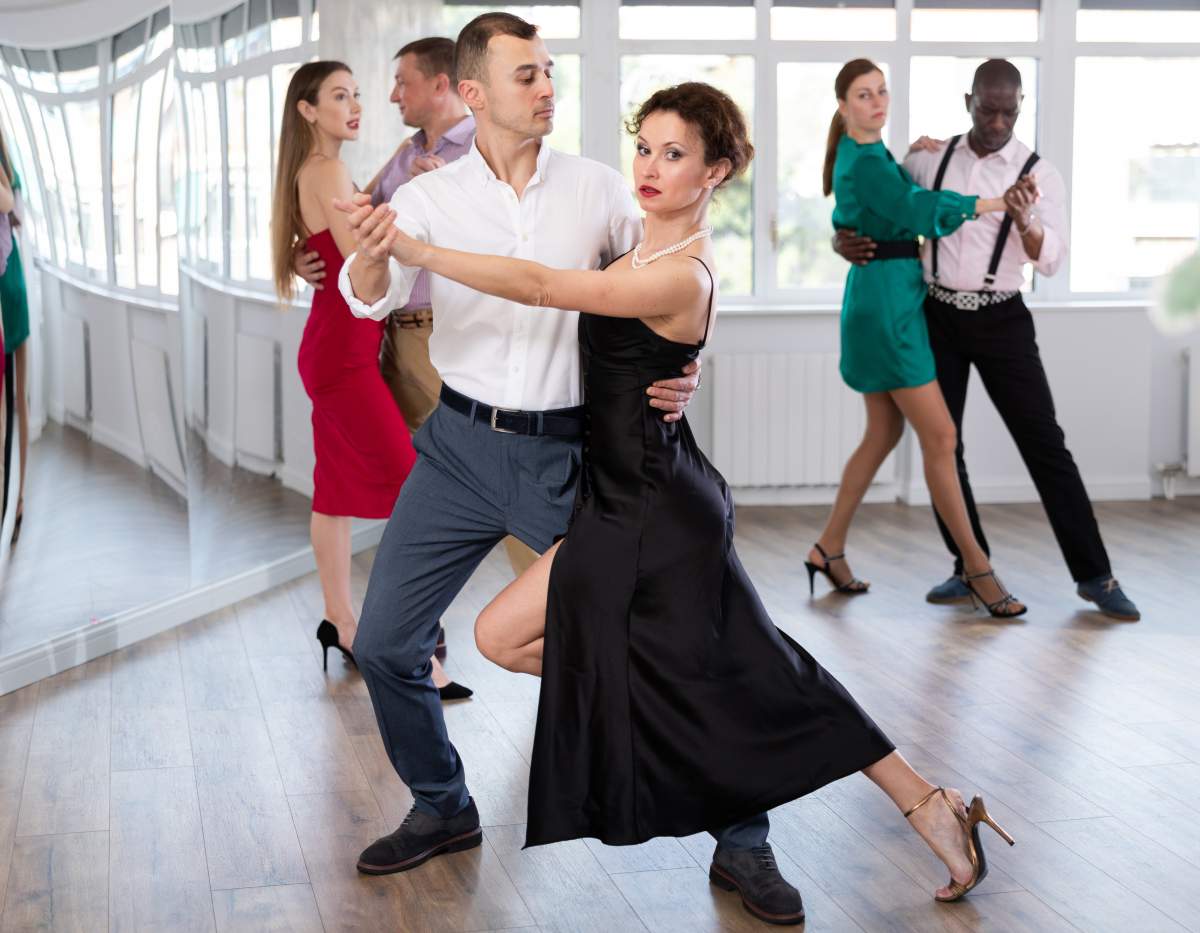
How does partner connection differ?
Both dances require clear communication, balance, and respect for personal boundaries. The leader suggests direction and timing, while the follower responds and contributes to the movement. Good partner dancing is not about forcing a person through a pattern.
Salsa often uses more open-position work. Partners may separate, reconnect, and rotate through turns while maintaining a light hand connection. This can create a feeling of movement and variety.
Bachata frequently uses a closer position, although it can also be danced openly. Because the partners may remain near one another for longer periods, comfort, consent, posture, and appropriate distance are especially important.
A respectful class should make it acceptable to ask for more space, decline a movement, or change partners. These are normal parts of learning social dance.
Does bachata always have to be sensual?
No. Bachata is not automatically sensual, and dancers do not need to use close-contact styling to participate. Traditional and modern forms include playful, romantic, rhythmic, and highly musical interpretations.
The word “sensual” usually refers to a particular styling that may include closer body positioning, controlled waves, body isolations, and expressive pauses. It is one branch of bachata rather than the entire dance.
Beginners can learn the basic steps, timing, turns, and partner connection without using styling that feels uncomfortable. A class should distinguish between the dance’s technique and optional performance choices.
What kind of music is used?
Salsa music often features layered percussion, horns, piano, bass, and strong rhythmic accents. Its structure can encourage turns, breaks, and changes in energy. Listening for the beat is a central part of learning.
Bachata is commonly associated with prominent guitar lines, steady percussion, and lyrics that may express romance, heartbreak, longing, or everyday emotion. The music’s phrasing often gives dancers room to use pauses and subtle changes in texture.
Neither style requires a dancer to understand every musical detail immediately. Beginners can start by identifying the steady beat, counting consistently, and noticing repeated sections in the music.
Which dance is better for weddings?
Either style can work well for wedding choreography, but the right choice depends on the couple’s music and comfort level.
Bachata can be a practical choice for a first dance because its compact basic step is easy to adapt to a limited floor area. Its gentle rhythm can also suit a romantic song.
Salsa may be a better fit for couples who want a lively, playful routine with turns, traveling patterns, and a more dramatic finish. It can create an upbeat performance, but the choreography may require more practice if it includes multiple turns or direction changes.
For wedding preparation, the most useful approach is to select a song with a clear beat, allow enough rehearsal time, and choose movements that feel natural rather than trying to include every advanced figure.
Which style should a Williamsville resident choose?
Choose salsa if the goal is energetic movement, turns, rhythmic variety, and a dance that uses more of the floor. Choose bachata if the goal is a steadier entry point, compact patterns, emotional musicality, and close partner connection.
There is no requirement to choose only one. Learning bachata can improve rhythm and body awareness for salsa, while salsa can improve balance, direction changes, and partner responsiveness for bachata. For many local residents, alternating between the two styles offers a useful indoor activity throughout the year and a broader foundation for Latin dance or wedding choreography.